The Sports Docs Podcast
Join orthopedic sports surgeons, Dr. Catherine Logan & Dr. Ashley Bassett, on their AWARD WINNING PODCAST, as they chat about the most recent developments in sports medicine and dissect through all the noise.
The Sports Docs – Dr. Logan & Dr. Bassett – are friends & former co-residents from the Harvard Combined Orthopaedic Residency Program, who went onto esteemed sports medicine fellowships at The Steadman Clinic and The Rothman Institute, respectively.
Sports medicine is a constantly evolving field, with hundreds of new articles published each month on the topic. This ever-growing wealth of information can make it challenging to stay updated on the newest approaches and techniques, and to know which data should actually change your practice.
On each episode of The Sports Docs podcast, the hosts will tackle a specific injury – from ACL tears to shoulder instability – and review the top research from various high-impact journals that month, including The American Journal of Sports Medicine, Arthroscopy: The Journal of Arthroscopic and Related Surgery, Sports Health, Journal of Shoulder and Elbow Surgeons, and more.
The Sports Docs will also be joined by experts in the field of sports medicine – orthopedic surgeons, nonoperative sports medicine specialists, athletes, physical therapists, athletic trainers and others – to provide a fresh and well-rounded perspective based on their unique experiences.
Latest Episodes
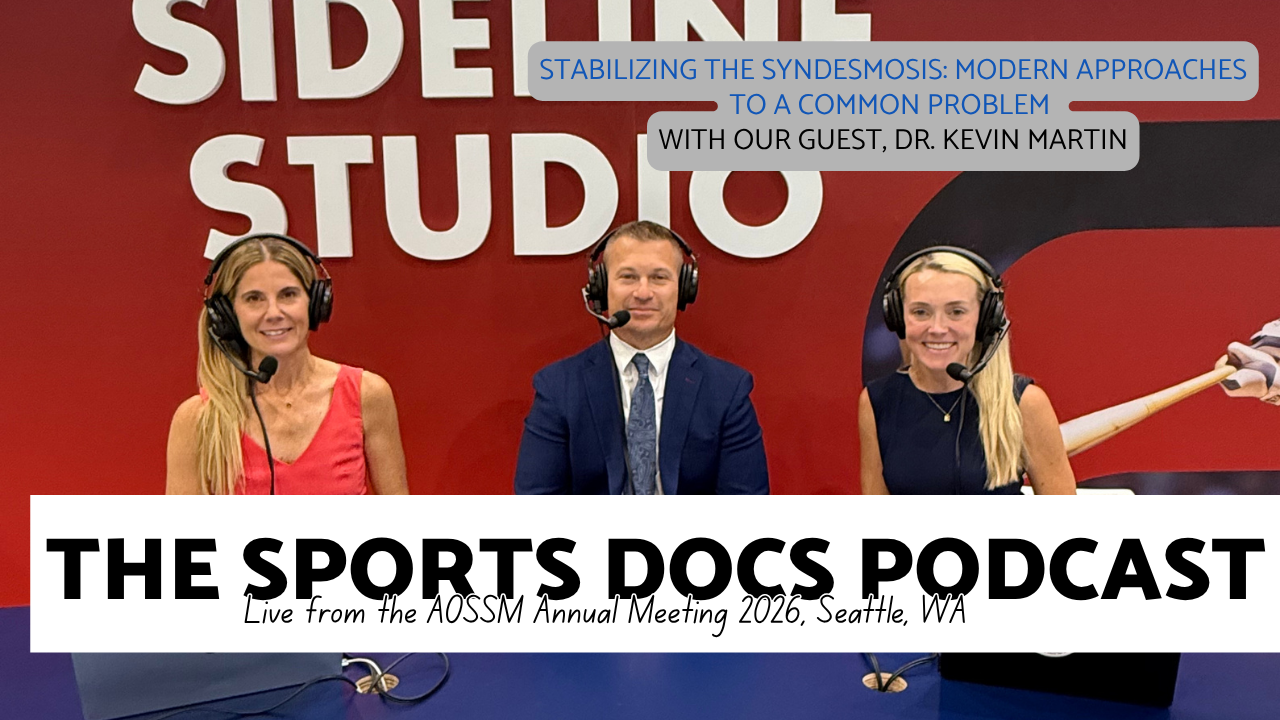
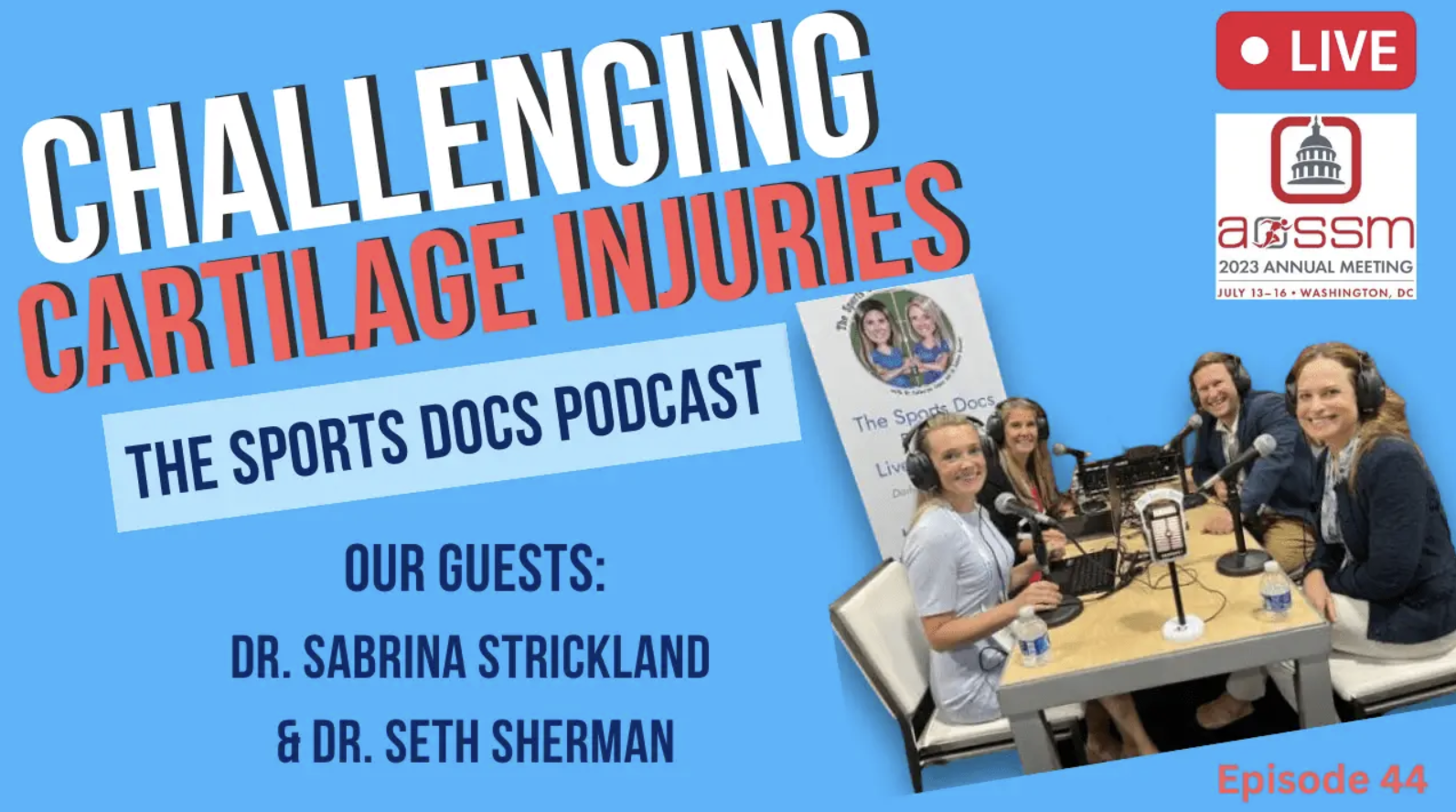
Advances in ACL reconstruction continue to push the field toward stronger fixation, improved graft protection, and more biologically friendly implants. In this special sponsored episode of The Sports Docs Podcast, recorded live at the 2026 AOSSM Annual Meeting in Seattle, Drs. Catherine Logan and Ashley Bassett welcome Dr. Seth Sherman to discuss the latest innovations in graft fixation and how they are changing the way surgeons approach ACL reconstruction.
The conversation begins with one of the most important decisions in ACL surgery—graft selection. Dr. Sherman shares his approach to choosing between bone-patellar tendon-bone (BTB), quadriceps tendon, and hamstring autografts, emphasizing how patient age, sex, sport, anatomy, and activity level influence decision-making. He also discusses the growing body of evidence supporting quadriceps tendon autografts, particularly in young athletes and female patients.
The future of sports medicine isn't shaped solely in the operating room—it is also driven by visionary leadership, collaboration, education, and innovation. Live from the AOSSM Annual Meeting in Seattle, Drs. Catherine Logan and Ashley Bassett sit down with Corey Parker, MPA, the newly appointed CEO of the American Orthopaedic Society for Sports Medicine (AOSSM), to discuss his vision for one of the world's leading sports medicine organizations.
With more than two decades of executive leadership experience in healthcare, academic medicine, and national physician organizations, Corey shares what drew him to AOSSM and how he plans to help the society continue advancing education, research, advocacy, and member engagement in an era of rapid change.
Recorded live from the American Orthopaedic Society for Sports Medicine (AOSSM) Annual Meeting in Seattle, Dr. Aaron Krych joins Drs. Catherine Logan and Ashley Bassett for an in-depth discussion on the rapidly evolving field of cartilage restoration. The conversation explores how treatment has shifted from simply filling cartilage defects to restoring the entire knee joint through comprehensive patient evaluation, biologic innovations, and advanced surgical techniques.
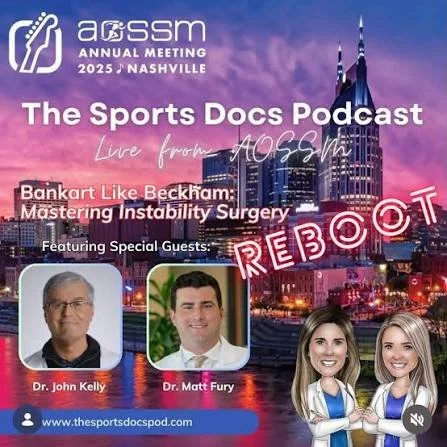
Today’s episode is going to focus on surgical management of primary and recurrent anterior glenohumeral instability in athletes.
We are joined today by two outstanding guests!
Dr. John Kelly is a professor of orthopedic surgery at the University of Pennsylvania and Director of Shoulder Sports Medicine at UPenn Ortho. He is Co-director of the Sports Medicine Fellowship and is a team physician for the Philadelphia Union. Dr. Kelly is the former President of the Eastern Orthopaedic Association and Vice President of the Arthroscopy Association of North America.
Dr. Matt Fury is an orthopaedic surgeon at the Baton Rouge Orthopaedic Clinic who specializes in sports-related injuries to the shoulder, elbow, and knee as well as complex shoulder conditions. Dr. Fury graduated from LSU Medical School in New Orleans before completing his orthopaedic surgery residency at the Harvard Orthopaedic Residency Program. He then completed specialized fellowship training at the world-renowned Hospital for Special Surgery in New York City.
Today’s episode is going to focus on osteochondral allograft transplantation, and specifically how basic science research can and should impact your clinical practice.
We are joined today by Dr. Brian Cole, a Professor of Orthopedic Surgery and Chair of the Department of Orthopedic Surgery at Rush University Medical Center, Chair of Surgery at Rush Oak Park Hospital and Section Head of the Rush Cartilage Restoration Center. He is also a past president of the Arthroscopy Association of North America and a team physician for the Chicago Bulls and Chicago White Sox.
We are narrowing the focus of our conversation today to osteotomies. We just did a two-part episode with Dr. Cassandra Lee that tackles all the different cartilage restoration options for the patellofemoral joint. So go check that out if you want to hear more about when to choose OATS vs. OCA vs. MACI. But for today: let’s chat about osteotomies.
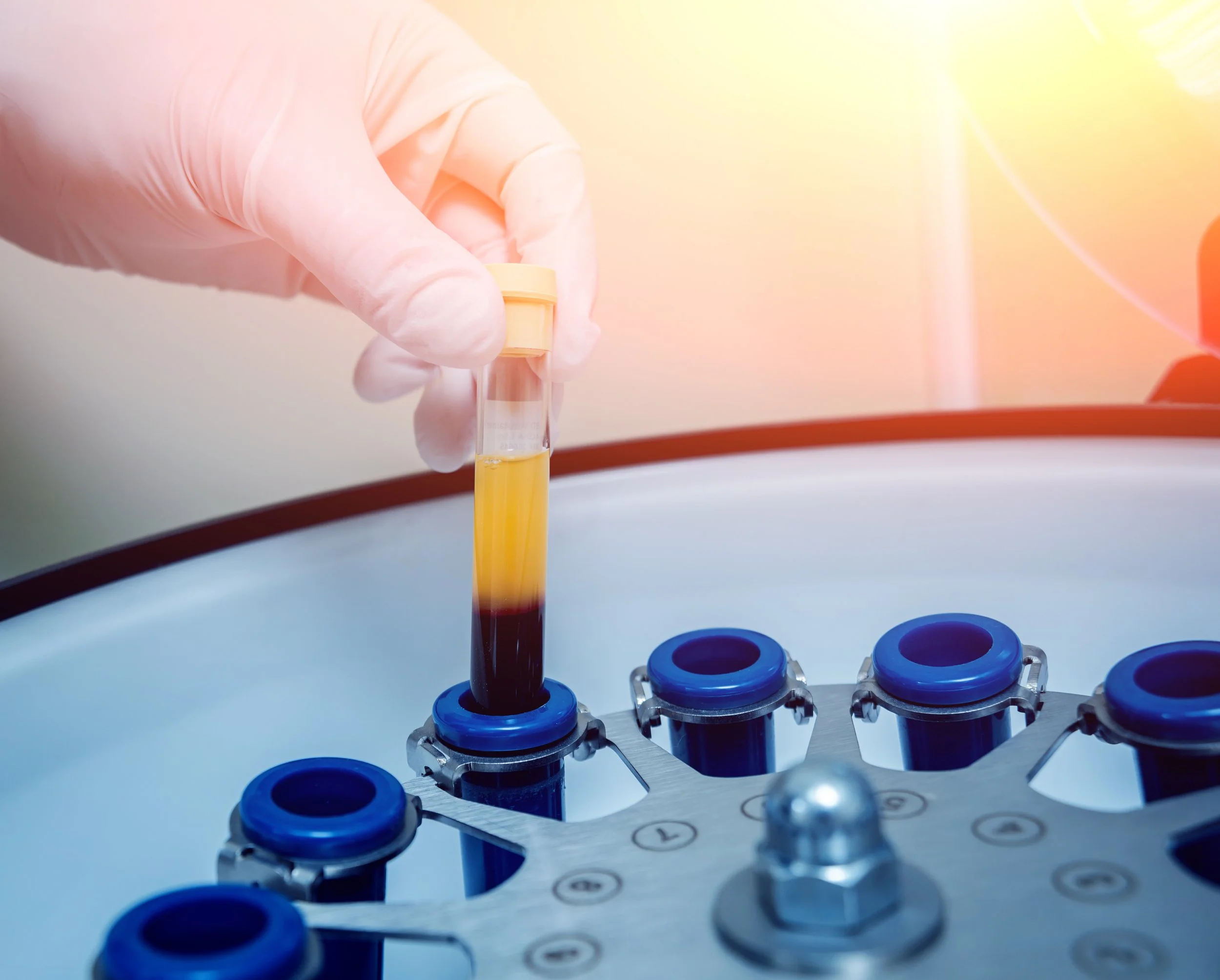
In this episode of Overtime with The Sports Docs, Drs. Ashley Bassett and Catherine Logan explore an intriguing laboratory study examining whether exercise performed immediately before a PRP blood draw can enhance the cellular composition of platelet-rich plasma.
As biologic therapies continue to expand throughout sports medicine, optimizing PRP has become increasingly important. While most discussions focus on centrifuge systems, platelet concentrations, leukocyte content, and injection techniques, this study introduces another potential variable: the patient.
The FIFA World Cup has begun and ACL injuries remain one of the most impactful injuries in professional soccer. While much of the discussion around ACL reconstruction focuses on graft choice, rehabilitation, and return-to-play timelines, a new study published in the American Journal of Sports Medicine highlights an often-overlooked challenge: secondary muscle injuries after athletes return to competition.
In this episode of Overtime with The Sports Docs, Drs. Ashley Bassett and Catherine Logan review the newly published article, "Secondary Muscle Injuries and Performance Decline After Anterior Cruciate Ligament Reconstruction in Professional Soccer." The study examines the incidence, timing, and impact of muscle injuries following ACL reconstruction in elite soccer players and explores how these injuries affect performance, playing time, and even market value.
In Part II of our discussion on plantar fasciitis, Dr. Ashley Bassett and Dr. Catherine Logan continue their conversation with Dr. Arianna Gianakos, orthopedic foot and ankle surgeon at Yale University. This episode focuses on treatment options for patients who fail initial conservative management, including injection therapies, biologics, and surgical intervention for recalcitrant plantar fasciitis.
The discussion highlights the latest evidence supporting platelet-rich plasma (PRP), compares PRP to corticosteroid injections and other nonoperative treatments, and reviews emerging minimally invasive surgical techniques—including nano-arthroscopic plantar fascia release.
In this episode of The Sports Docs Podcast, Dr. Ashley Bassett and Dr. Catherine Logan are joined by Dr. Arianna Gianakos, orthopedic foot and ankle surgeon at Yale University, to discuss one of the most common causes of heel pain in athletes and active adults—plantar fasciitis.
The conversation explores the underlying pathology of plantar fasciitis, risk factors that contribute to its development, and the latest evidence supporting conservative treatment strategies. Dr. Gianakos shares practical pearls on patient evaluation, imaging, bracing, orthotics, stretching programs, and physical therapy, helping clinicians navigate an often frustrating condition for both patients and providers.